
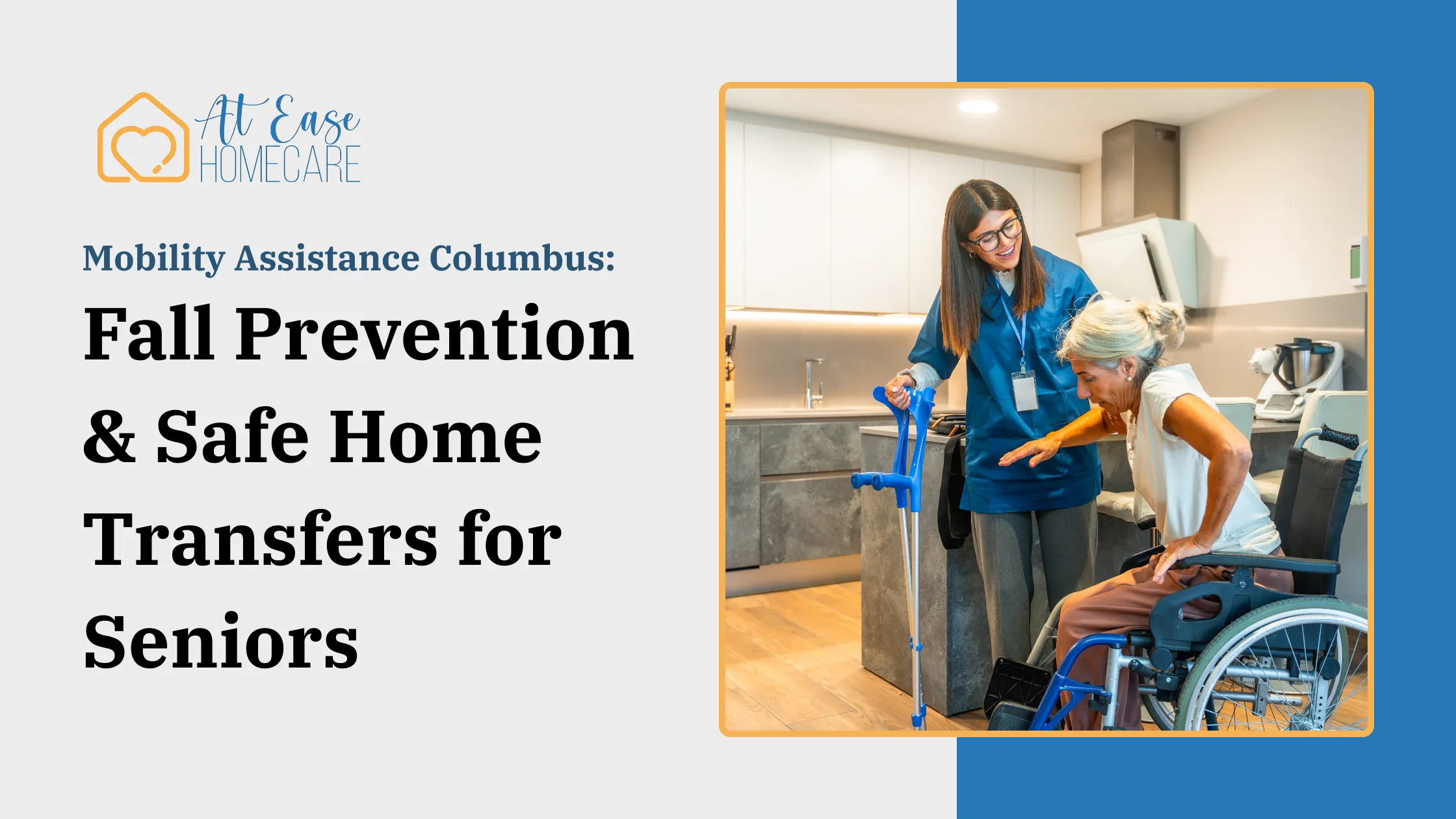
Safe movement at home becomes increasingly crucial as mobility changes over time. For seniors living in Columbus and across Franklin County, everyday activities such as standing, walking, or transferring between surfaces can increase fall risk without proper support. Mobility assistance focuses on improving safety while allowing seniors to remain active in familiar surroundings.
This blog explores how mobility and transfer assistance support fall prevention, strengthen daily routines, and help families plan safer in-home care throughout Columbus, OH.
Why Mobility Assistance Is Essential for Seniors Living at Home in Columbus
Mobility changes often develop quietly, but their impact on safety can grow quickly if left unsupported. Addressing these changes early helps seniors remain stable and continue their daily routines at home.
- Fall risk reduction: Guided movement support lowers the likelihood of slips, imbalance, and sudden instability during routine activities.
- Home-specific awareness: Assistance is adapted to standard Columbus home layouts, including stairs, bathrooms, and narrow walkways.
- Routine continuity: Seniors receive physical support without disrupting familiar schedules or habits.
Understanding why mobility assistance matters makes it easier to see how it fits into everyday routines.
How Mobility and Transfer Assistance Integrates Into Daily Routines
Mobility support works best when it flows naturally with daily activities rather than interrupting them. The focus remains on enhancing safety while keeping routines predictable.
- Assisted walking: Caregivers provide steady support during short distances inside the home to improve balance and confidence.
- Transfer assistance: Help moving between beds, chairs, toilets, and seating surfaces reduces strain and instability.
- Balance reinforcement: Proper positioning during standing and sitting supports controlled, safer movement.
When mobility assistance aligns with daily routines, fall prevention becomes part of everyday care.
The Role Mobility Assistance Plays in Fall Prevention at Home
Most falls occur during brief transitions rather than extended activity. Mobility assistance focuses on supporting these higher-risk moments.
- Controlled transitions: Support during sit-to-stand and stand-to-sit movements reduces the risk of sudden imbalance.
- Obstacle navigation: Guidance around thresholds, tight spaces, and uneven flooring minimizes hazards.
- Movement consistency: Repeated support helps build safer movement habits over time.
This preventive approach connects directly to identifying mobility challenges before incidents occur.
Common Mobility Challenges Seniors Experience Inside the Home
Mobility concerns often appear gradually, making them easy to overlook. Recognizing early signs allows families to proactively plan support.
- Standing difficulty: Trouble rising from chairs or beds may indicate reduced strength or balance.
- Unsteady walking: Hesitation or wobbling during short distances can signal increased fall risk.
- Nighttime instability: Fatigue and limited lighting often affect coordination during evening routines.
- Furniture reliance: Using walls or furniture for balance suggests growing instability.
Identifying these challenges helps guide the structure of mobility assistance.
How Mobility and Transfer Assistance Are Structured for Columbus Households
Mobility assistance follows a transparent, adaptable approach focused on safety and comfort in the home.
- Movement evaluation: Balance, strength, and transfer abilities are reviewed to understand support needs.
- Risk zone identification: Bathrooms, stairways, and entry points are assessed for safety concerns.
- Support planning: Assistance techniques are matched to daily routines and comfort levels.
- Ongoing adjustments: Care evolves as mobility needs change.
This structure ensures support remains effective without overwhelming the household.
Mobility and Transfer Assistance Options Available in Columbus, OH
Different households require different levels of mobility support based on daily needs and environments.
In-Home Mobility Assistance
In-home support allows seniors to move safely while remaining in familiar surroundings.
- One-on-one support: Personalized assistance focused entirely on the individual during walking and transfers.
- Routine-based care: Support aligned with established schedules to maintain consistency.
- Home familiarity: Remaining at home reduces confusion and time spent adjusting.
Learn more about this service through Mobility & Transfer Assistance in Columbus, OH, which outlines how At Ease Home Care supports safe movement at home.
Mobility Support Outside the Home
Some situations require assistance beyond the household environment.
- Vehicle transfers: Support entering and exiting vehicles to reduce strain during travel.
- Appointment navigation: Assistance during short outings or medical visits supports stability.
- Entryway support: Help managing steps, ramps, and thresholds improves safety.
Choosing the right option ensures continuity across environments.
Preparing the Home for Safer Movement and Transfers
A safe home environment supports every aspect of mobility assistance. When living spaces are organized with movement in mind, seniors can transition more confidently between rooms, reducing hesitation and fall risk. Minor adjustments made early help mobility support remain consistent and effective as daily routines continue.
- Clear pathways: Keeping walkways open allows caregivers and seniors to move freely without having to navigate obstacles or unexpected hazards.
- Stable furniture placement: Secured chairs and seating surfaces provide reliable support during transitions between standing and sitting.
- Bathroom safety: Support features such as grab bars and non-slip surfaces help mitigate risk in one of the highest-risk areas of the home.
- Proper lighting: Adequate lighting improves visibility throughout the home, especially during early morning or nighttime movement.
These preparations help mobility assistance function smoothly within everyday routines.
Mistakes That Can Increase Fall Risk for Seniors
Fall risks often increase not because support is unavailable, but because warning signs are overlooked or addressed too late. Recognizing common missteps helps families strengthen safety before incidents occur and maintain steadier routines at home.
- Delayed support: Waiting until after a fall reduces opportunities for preventive care and structured planning.
- Ignoring small changes: Minor balance or movement issues often indicate deeper mobility concerns that grow over time.
- Inconsistent assistance: Irregular support can disrupt movement patterns and increase uncertainty during transfers.
- Skipping reassessment: Mobility needs evolve, and care strategies must adjust to remain effective.
Avoiding these patterns supports safer movement and long-term stability.
Situations Where Mobility Assistance Makes the Greatest Difference
Mobility assistance becomes critical during periods of physical or routine change. These moments often increase fall risk and require added attention to maintain safety without disrupting daily life.
- Post-hospital recovery: Temporary weakness or reduced endurance can make everyday movement more challenging.
- New mobility devices: Guidance helps seniors adjust safely to walkers, canes, and other mobility aids.
- Temporary weakness: Illness or fatigue can affect coordination and balance unexpectedly.
- Caregiver schedule gaps: Mobility assistance ensures consistent support when regular caregivers are unavailable.
In these situations, structured support helps maintain confidence and routine.
Practical Ways to Improve Safety Through Mobility Support
Practical mobility assistance relies on planning, communication, and consistency. When families take a thoughtful approach, mobility support becomes easier to maintain and more reliable over time.
- Early observation: Identifying changes in movement before incidents occur allows for proactive adjustments.
- Routine consistency: Repeating safe movement patterns reinforces stability and confidence.
- Clear communication: Sharing preferences and limitations helps caregivers provide more effective support.
- Regular reassessment: Ongoing review ensures assistance continues to match current mobility needs.
These practices help families sustain dependable in-home mobility support.
Mobility Assistance Services Across Columbus and Franklin County, OH
Access to local mobility assistance is essential to maintaining consistent care. Service availability across Columbus and Franklin County allows families to plan support that aligns with household routines and changing needs.
- Columbus coverage: In-home mobility services are available throughout the city.
- Franklin County reach: Support extends to surrounding communities.
- Veterans assistance options: Eligible families may explore additional support pathways.
- Flexible scheduling: Care aligned with household routines and needs.
Families can confirm availability through At Ease Home Care service areas and reference the
At Ease Home Care, the Columbus location is for local coordination.
Frequently Asked Questions About Mobility Assistance in Columbus, OH
Families often want clear, practical answers before arranging mobility assistance. The questions below address common concerns from seniors and caregivers across Columbus and Franklin County.
What does mobility and transfer assistance include?
Mobility assistance supports walking, standing, sitting, and transferring between surfaces with a focus on safety and fall prevention. Learn more through Mobility & Transfer Assistance services, which explain how in-home support is delivered.
Who benefits from mobility assistance?
Seniors experiencing balance challenges, reduced strength, or recovery from illness or injury often benefit most. Mobility assistance helps maintain safety while supporting daily routines.
Can mobility assistance change over time?
Yes. Support adapts as mobility levels and household needs evolve, ensuring care remains appropriate.
Is mobility assistance provided at home?
Most services are delivered in-home to support familiar routines. Families may also explore related help through Companion care services when supervision and mobility support are needed together.
Get Personalized Mobility and Transfer Assistance From At Ease Home Care
If daily movement has become less stable or more challenging, you do not have to manage these changes alone. Proper mobility assistance can help reduce fall risk and support safe, consistent movement at home.
At Ease Home Care provides mobility and transfer assistance for seniors across Columbus and Franklin County, tailored to real routines, evolving needs, and home-based safety. Whether you need short-term support or ongoing assistance, our team helps you create a care plan that fits your household without disruption.
📍 Address: 200 E Campus View Blvd, Suite 200, Columbus, OH 43235
📞 Call: (614) 680-1212 to discuss mobility assistance options
🌐 Explore services: Mobility & Transfer Assistance in Columbus, OH
Taking the first step toward mobility support does not limit independence. It helps protect safety, confidence, and continuity at home.